

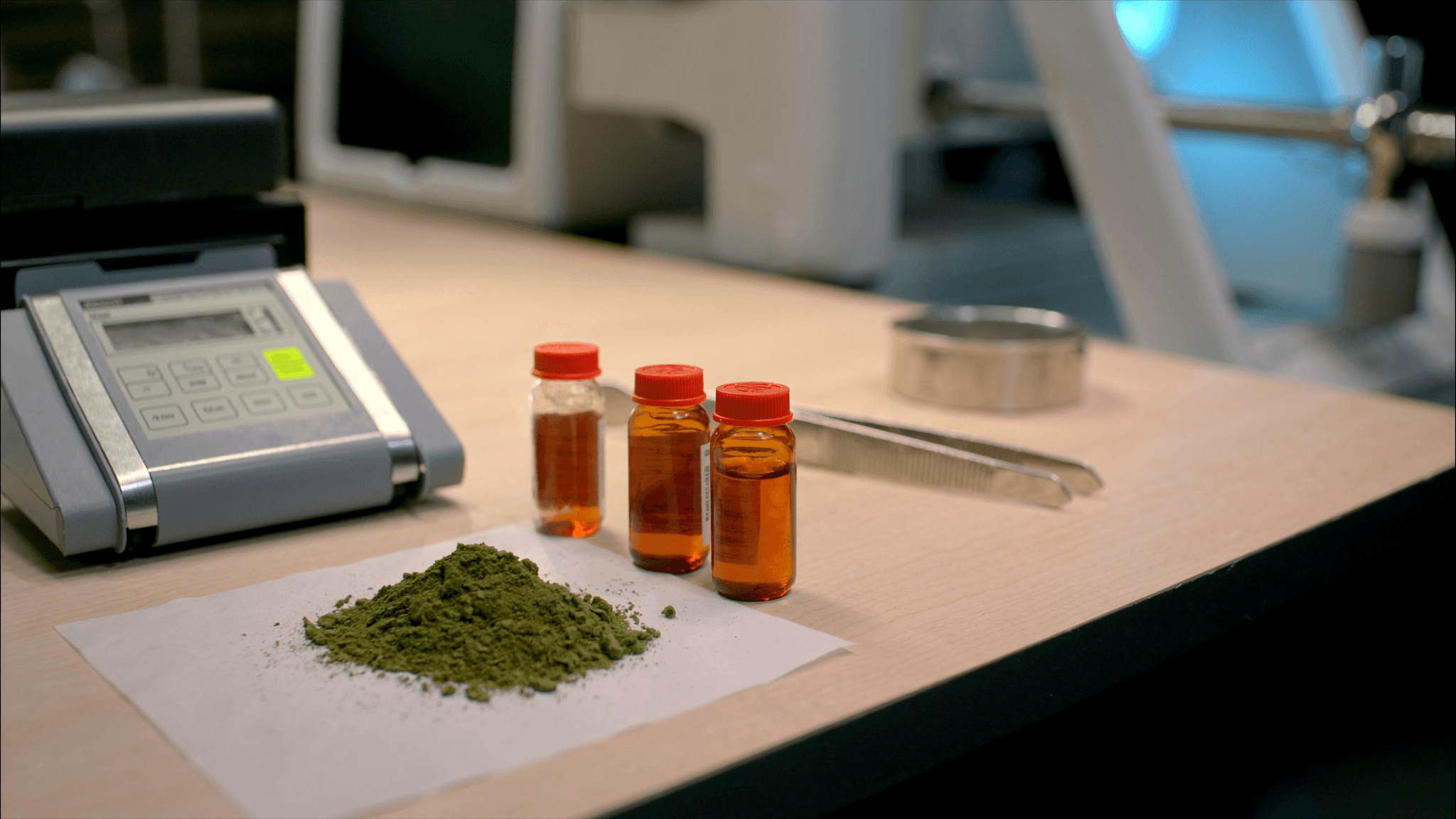
The molecule we identify.
The assays we run on 7-Hydroxymitragynine.
The failure modes we see most.
- 01Concentrated 7-OH extracts mislabeled as 'kratom extract' but tested at 20-40 % 7-OH (vs 2 % AKA-GMP ceiling). FDA / DEA enforcement targets these products specifically.
- 02Synthesized 7-OH added back to a low-7-OH leaf base to hit a target ratio. The alkaloid profile (relative ratios of mitragynine, speciogynine, paynantheine) helps identify natural-leaf vs synthesized-spike products.
- 03Variant labeling: '7-hydroxymitragynine' vs 'pseudo-indoxyl' vs 'mitragynine pseudoindoxyl' — different compounds with overlapping search terms.
- 04Raw leaf material that exceeds the 2 % ratio without obvious extraction processing — natural variability can push 7-OH content higher than expected for some strains.
- 05Heavy metals from cultivation soil. Imported kratom material has shown Pb / Cd above USP <232> limits in 5-15 % of submissions historically.
Transparent panels for 7-Hydroxymitragynine.
LC-MS/MS quantification of 7-OH + mitragynine + ratio. The compliance-question receipt.
- LC-MS/MS 7-OH (mg/g)
- Mitragynine quantification
- 7-OH / total alkaloid ratio
- AKA-GMP cap reporting
- Public COA + accession #
- 5-6 day turnaround
Full alkaloid profile + heavy metals + microbial. The American Kratom Association GMP-aligned COA.
- Everything in 7-OH Quantification
- 5-plex alkaloid profile
- ICP-MS heavy metals
- USP <61/62> microbial
- Salmonella exclusion
- 5-7 day turnaround
Plus 66-analyte pesticide screen + mycotoxins + moisture. The full retail-COA panel.
- Everything in AKA-GMP Aligned
- 66-analyte pesticide screen
- Mycotoxin 5-plex
- Karl Fischer moisture
- Loss on drying
- 7-9 day turnaround
7-Hydroxymitragynine testing — the common questions.
Why does the 2 % 7-OH cap exist?+
The American Kratom Association GMP standard sets the cap at 2 % of total alkaloid content based on natural-leaf material observations. Natural raw kratom measures 0.1-0.4 % 7-OH; concentrated extracts that exceed 2 % are typically the result of processing (selective extraction, post-extraction concentration) rather than natural variability. The cap is a regulatory line that distinguishes 'whole-leaf kratom' from 'concentrated 7-OH product'. FDA and DEA scrutiny since 2024 has focused specifically on products that exceed 2 %.
How do you distinguish natural 7-OH from added synthesized 7-OH?+
Natural kratom leaf has a characteristic ratio of major alkaloid (mitragynine) to minor alkaloids (speciogynine, paynantheine, corynantheidine, 7-OH). Products where 7-OH has been spiked in have an alkaloid profile that's inconsistent with natural-leaf ratios — typically very high 7-OH but normal levels of the other minors. The 5-plex alkaloid profile (included in AKA-GMP Aligned panel) flags this profile shift.
What sample size do you need?+
Raw leaf / powder: 5 g representative subsample. Extracts (resin, paste): 5-10 g. Capsules: 30 capsules from the same lot. Liquid extracts / tinctures: 30 mL. Ship in original packaging to preserve lot and batch information.
Can you expedite turnaround for FDA inspection or recall response?+
Yes for the 7-OH Quantification panel — coordinate with the lab before shipping; Expedited turnaround (48–72 hours) is available at +50 % when an inspection or recall demands rapid data. The AKA-GMP Aligned and Full Botanical panels run longer because of the USP <61/62> microbial incubation included on those.
Is testing required for AKA-GMP certification?+
Yes. AKA-GMP certification requires ongoing batch testing for the alkaloid profile, heavy metals, microbial, and pesticide / mycotoxin scope. Our AKA-GMP Aligned panel ($249) covers the alkaloid + heavy metals + microbial; the Full Botanical panel ($389) adds the pesticide / mycotoxin scope. Both are AKA-GMP-aligned in reporting format.
Can you test legality status under recent FDA / DEA actions?+
No — we don't provide legal opinions. Our COAs report the quantitative chemistry (7-OH mg/g, % of total alkaloid, alkaloid profile). Whether a specific product is legal at a federal or state level is a regulatory question your legal counsel addresses with the data. Many state-level kratom laws reference the AKA-GMP standard or the 2 % 7-OH cap; our COAs provide the analytical basis to demonstrate compliance.
Other kratom alkaloid (mitragyna speciosa) testing —
Cannabinoid profile, THC compliance — botanical sibling category with similar regulatory dynamics.
For botanical supplement formulations containing kratom — label-claim verification + safety.
Full kratom menu — AKA-GMP aligned panels, alkaloid profile, heavy metals, microbial, pesticides.
Verify the alkaloid profile. Sign the COA.
LC-MS/MS 7-OH quantification, total alkaloid ratio, AKA-GMP cap reporting — Houston bench, public COA.