

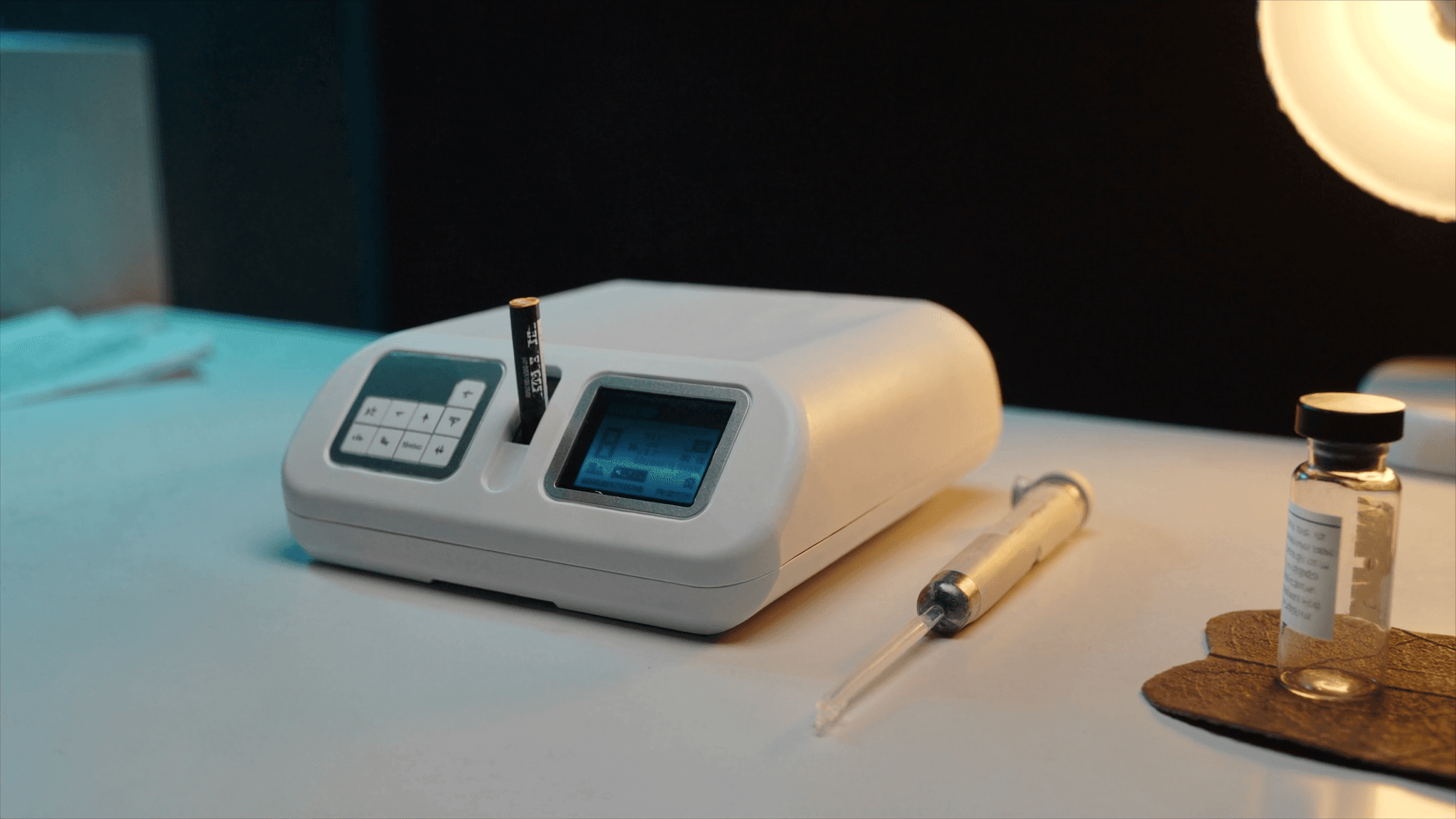
Every endotoxin method on one bench.
One assay class, four validated methods. Kinetic chromogenic is the numeric standard; gel-clot is the compendial confirmatory; recombinant Factor C is the animal-free alternative regulators now accept. Every result ships with the inhibition / enhancement validation that proves your matrix didn't mask the reading.
Published. Per-test.
No quote calls.
Every assay a la carte, every panel bundled. Bulk discount at 5+ samples. Prices below reflect a single-compound submission.
Kinetic chromogenic LAL with inhibition / enhancement validation. Numeric EU/mL result on a public COA. The standard injectable-grade endotoxin panel.
- USP <85> kinetic chromogenic
- Numeric EU/mL result
- Standard-curve r² documentation
- Inhibition / enhancement (PPC) validation
- Public COA + accession #
LAL endotoxin plus USP <71> sterility — the two-assay pair injectable-grade buyers and compounders ask for on the same COA.
- Endotoxin (LAL, USP <85>)
- Sterility (USP <71>)
- Numeric EU/mL + pass/fail
- Public COA + accession #
Endotoxin + Sterility + Bioburden (USP <61>) on one COA — the full microbiological safety picture for a parenteral lot.
- Endotoxin (LAL, USP <85>)
- Sterility (USP <71>)
- Bioburden (USP <61> TAMC + TYMC)
- Public COA + accession #
Where endotoxin QC fails.
Endotoxin isn't only a contamination problem — it's a measurement problem. Matrix interference, process-water carryover, and glassware that was never depyrogenated account for most of the flagged and unreliable readings we re-run. Knowing the failure mode picks the right method.
USP <85>, USP <1085.1>, ISO 17025 Aligned, 21 CFR Part 11.
Bacterial endotoxin testing is anchored by the pharmacopeial chapters and the harmonized limit math. Here's exactly what we map to on every endotoxin COA.
The compendial chapter for endotoxin quantitation by LAL — gel-clot, kinetic turbidimetric, and kinetic chromogenic. We default to kinetic chromogenic on the Charles River Endosafe stack with documented inhibition / enhancement validation on every numeric result.
The USP guideline covering the animal-free recombinant Factor C alternative. rFC is specific to endotoxin (no Factor G beta-glucan cross-reactivity) and is accepted by FDA as a validated alternative method under a documented comparability study.
The endotoxin limit is K/M — K is the threshold pyrogenic dose (5 EU/kg for most parenterals, 0.2 EU/kg intrathecal) and M is the maximum human dose per kg per hour. Most parenteral peptides land at ≤ 0.25 EU/mL or ≤ 5 EU/mg. We report the observed value against your route-specific limit.
The cGMP requirement that parenteral and ophthalmic products carry pyrogen / endotoxin testing. As an analytical contract lab we generate the endotoxin data your QA team files inside its own GMP release package.
Instrument software audit trails, raw kinetic reads, and standard-curve records retained per 21 CFR Part 11-style data-integrity principles. Available to the client of record on request.
Endotoxin testing measures bacterial endotoxin — lipopolysaccharide from the outer membrane of Gram-negative bacteria — using the Limulus Amebocyte Lysate (LAL) reaction. It's mandatory for anything injectable or implantable because endotoxin causes a pyrogenic (fever) response even when the product is sterile. We report a numeric result in endotoxin units per mL (EU/mL) against your route-specific limit on a public COA.