

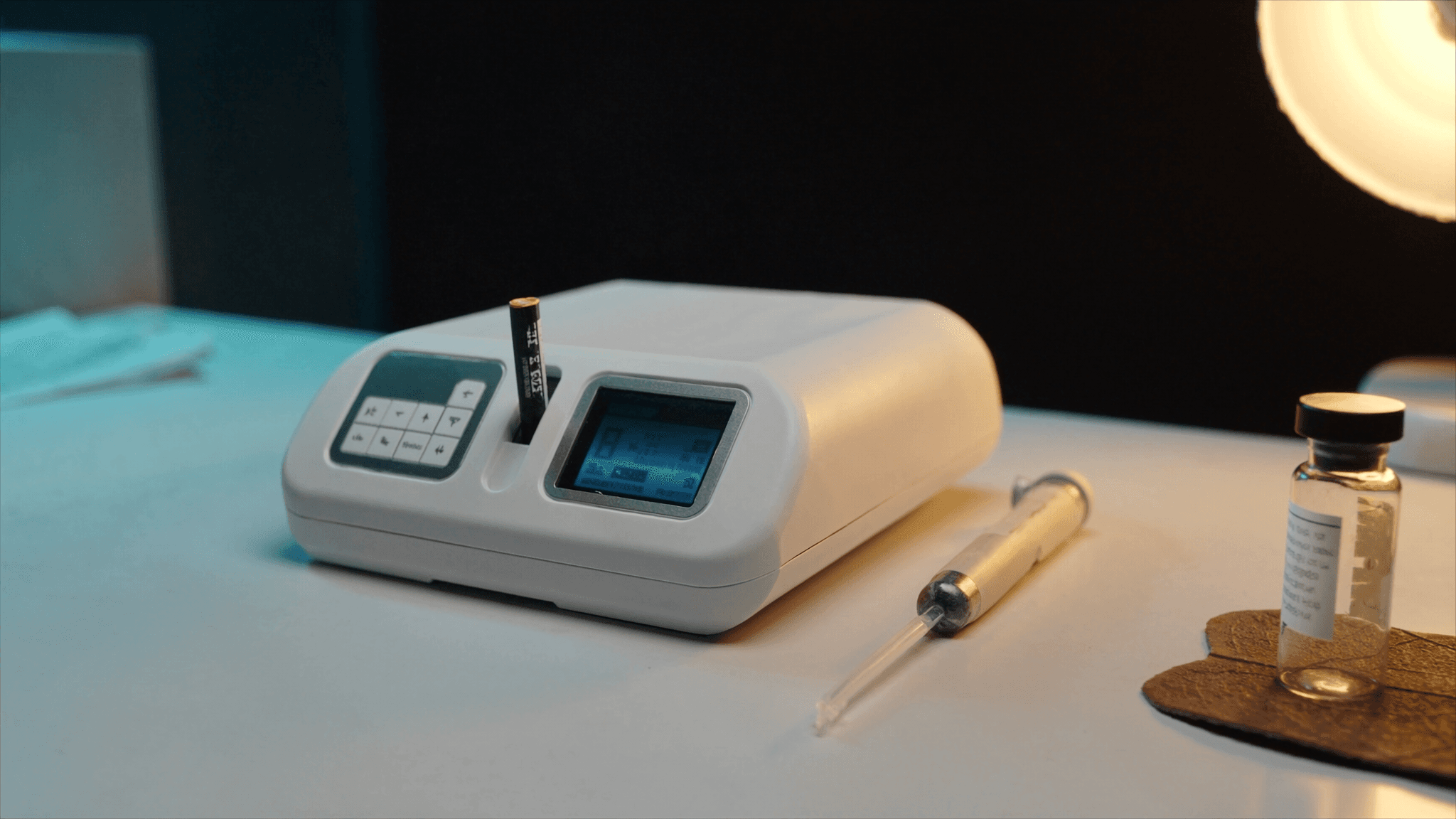
The molecule we identify.
The assays we run on TB-500.
The failure modes we see most.
- 01Full-length Thymosin β4 sold as 'TB-500'. The full 43-residue protein has very different pharmacology than the 17-residue active fragment. LC-MS shows you which one is actually in the vial.
- 02Shorter fragments (12-residue or 10-residue) labeled as TB-500. Less common but seen occasionally. LC-MS catches these by molecular ion mass.
- 03Net Peptide Content variability. Research-grade TB-500 spans 70-88 % NPC. The label-claim gap matters when dosing protocols are mass-based.
- 04Endotoxin from incomplete post-synthesis cleanup. TB-500 is a smaller peptide and easier to purify, but injectable-grade still needs LAL.
- 05Co-formulation drift. TB-500 is often sold blended with BPC-157 — the relative ratios in blends are not always what the label claims.
Transparent panels for TB-500.
Identity (LC-MS) + HPLC purity % + Net Peptide Content. Baseline COA — public + accession #.
- Identity (LC-MS/MS)
- HPLC purity % + impurity peaks
- Net Peptide Content
- Public COA + accession #
- 5-7 day turnaround
COA Essentials plus USP <85> endotoxin (LAL) and USP <71> sterility. The injectable-grade package.
- Everything in COA Essentials
- Endotoxin (LAL) USP <85>
- Sterility USP <71>
- Conformity Testing +1
- 5-7 day turnaround
Plus heavy metals (ICP-MS, USP <232>) and USP <61> bioburden. The full vendor / compounding COA.
- Everything in Injectable Safety
- Heavy metals (ICP-MS) USP <232>
- Bioburden (USP <61>)
- Conformity Testing +1
- 5-7 day turnaround
TB-500 testing — the common questions.
What's the difference between TB-500 and Thymosin β4?+
TB-500 in the research-peptide market refers specifically to the 17-residue active fragment of Thymosin β4 (the sequence LKKTETQ-EKNPLPSKETIEQEK is the most common active fragment definition; vendors vary). Thymosin β4 is the full 43-residue natural protein, ~4963 Da. The fragment is what most research protocols call for, but vials labeled 'TB-500' sometimes contain the full-length protein instead — LC-MS confirms which one. The fragment is what shows the regenerative effects in most published research.
Should I test TB-500 + BPC-157 blends together?+
Yes. The 'BPC + TB' blend is one of the most common combination products in the repair-peptide market. We run a single chromatogram with both peptides quantified, reporting purity %, retention time, and identity for each. Submit one vial of the blend — the standard pricing applies (Injectable Safety, $499, is the right panel for blends).
Is TB-500 stable in solution after reconstitution?+
Less stable than BPC-157 — TB-500 reconstituted in bacteriostatic water typically holds main-peak intactness for 14-21 days at 4 °C, with degradation peaks appearing thereafter. For stability work on reconstituted material, we offer pull-point testing at $99 per time point (Day 7, 14, 21, 28). Lyophilized TB-500 holds for 24+ months at -20 °C.
What sample size do you need?+
COA Essentials ($189): single 2 mg sealed lyophilized vial. Injectable Safety ($499): same single vial. Vendor Full QC ($749): two additional vials for sterility (destructive) and endotoxin (destructive). For blends with BPC-157 or other peptides, submit one vial of the blend at the standard sample size.
Why does TB-500 sometimes test as a different molecular mass than expected?+
Several reasons. Most common: vendor mislabeling — the vial contains full-length Thymosin β4 (43 residues, ~4963 Da) instead of the 17-residue active fragment (887 Da). Second most common: a different fragment definition — some vendors use a 12-residue active region instead of 17-residue. Third: oxidation variants (+16 Da). LC-MS reports the exact observed mass; we identify which form is present and flag any deviation from the labeled identity on the COA.
How does pricing compare to Janoshik, Vanguard, Chromate, and Freedom for TB-500?+
Our base COA bundles Identity + Purity + Net Content for $189 — most labs bill those separately (Vanguard $249 purity + $200 identity; Janoshik ~$110 + ~$120 net content). Injectable Safety (base + endotoxin + sterility) is $499 vs Vanguard's Gold (~$500); Vendor Full QC is $749 vs Vanguard Elite ($700) and Janoshik ($828).
Other repair peptide · thymosin β4 fragment testing —
The other half of the popular BPC + TB blend. Same HPLC + MS + NPC + TFA bench.
GLP-1 receptor agonist (Ozempic / Wegovy active). Different peptide class, same lab.
Full peptide menu — all bundles, panels, and compounds across the peptide classes we cover.
Confirm the fragment. Sign the COA.
HPLC purity, LC-MS identity, NPC, TFA, endotoxin, sterility — Houston bench, public COA, transparent pricing.