How to read our certificates of analysis
A Gold Standard certificate has a fixed structure: header, sample identity, method block, results table, chain-of-custody record and signature. Here is what each part means and how to check it.
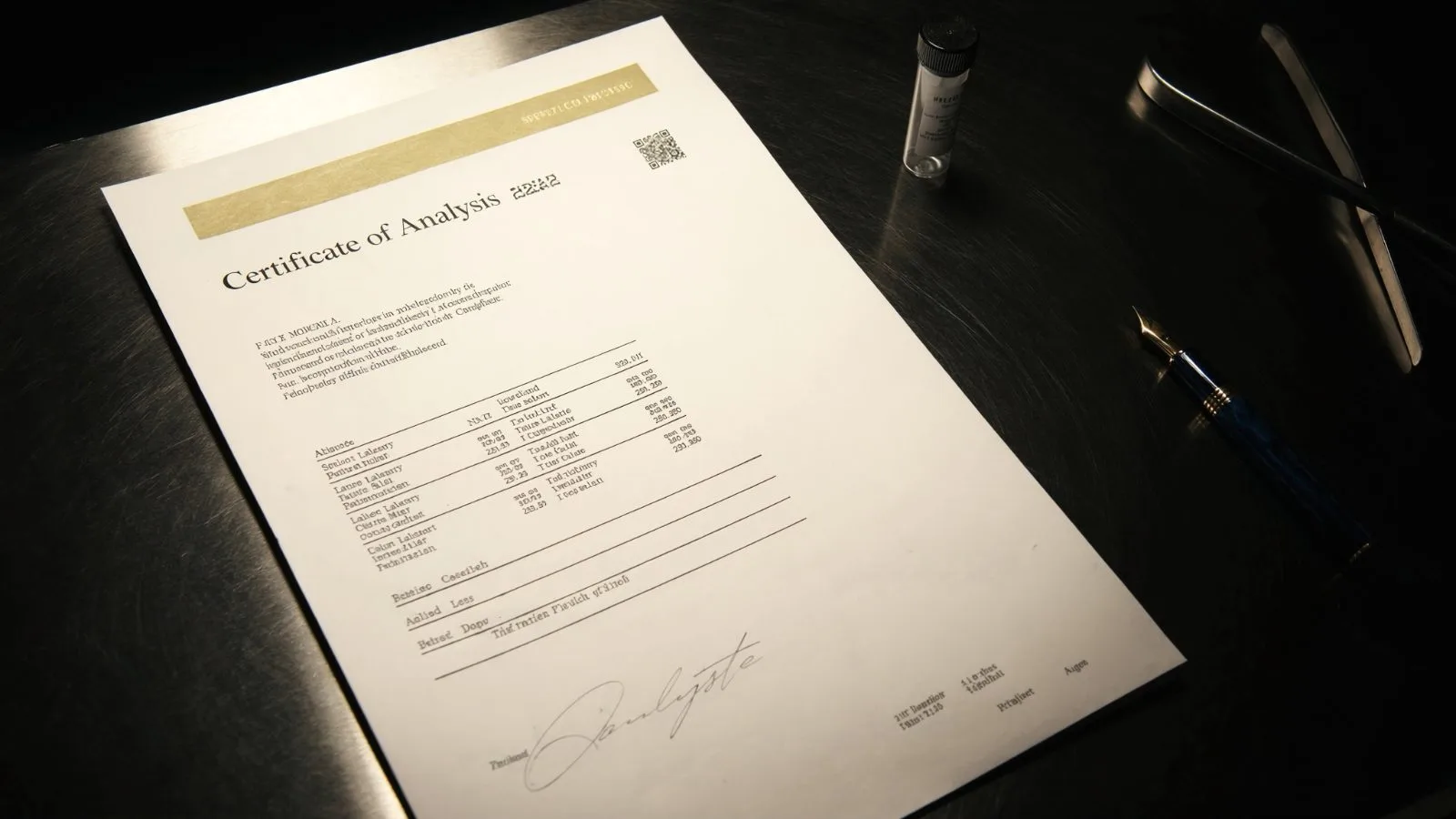
Every certificate we sign follows the same layout, so once you have read one you can read all of them. This walkthrough uses the peptide panel as the example; kratom, cannabis and supplement certificates share every section and differ only in the analytes listed.
The header
The top of the page carries the accession number (format GSA-2026-018432), the issue date, the client name or blind code, the instrument IDs used and the certificate version. The accession number is the primary key for everything else: type it into the verify field on our site and the public record must match the paper in your hand. If it does not resolve, the document is not ours.
Sample identity
Declared compound, declared lot or batch, matrix (lyophilized powder, capsule, leaf, tincture), container count received, container condition on opening and the intake photograph reference. The declared values are what you told us; the identity result further down is what we measured. The two are kept apart on purpose.
Method block
Each test names its method, instrument and reporting limit. A purity row will read, for example, "HPLC-UV, Agilent 1290 Infinity II, DAD 214 nm, RP-C18, LOQ 0.05%". An identity row will read "LC-MS/MS, Agilent 6490, observed m/z vs theoretical, tolerance ±0.1 Da". The method line is how another laboratory would reproduce the result.
Results table
| Column | What it holds | How to read it |
|---|---|---|
| Analyte | The substance or property measured | Matches the panel you ordered |
| Result | The measured value with units and significant figures | Compare against the specification column, not against a marketing claim |
| Specification | The acceptance limit and its source (USP, client, method) | A missing spec means the test is report-only |
| Verdict | Pass, Fail or Report | One Fail on any row fails the panel; we do not average it away |
| Uncertainty | Expanded uncertainty where the method supports it | A result inside the spec but within its uncertainty of the limit is flagged |
Chain-of-custody record
Carrier tracking number, receipt timestamp, opening video reference, blind code assigned, analyst initials for preparation, analysis and review, and the retained-sample location. Videos and photographs are kept three years and are viewable from the certificate page.
Signature and hash
The reviewing analyst and the releasing scientist both sign. Beneath the signatures is a SHA-256 hash of the signed PDF. Recompute the hash of the file you were sent; if it differs from the one in our public record, the file has been altered after release.
Three checks that take under a minute
- Verify the accession number on our site and confirm the compound, lot and date match.
- Compare the hash printed on the PDF with the hash in the public record.
- Open the chain-of-custody video for the intake and confirm the container matches what you shipped.